
Tulubaikaporia: A Ritual: A Review
Journey to the Centre of the Birch

Very many thanks to vanechka for providing me with an advanced reader copy of Tulubaikaporia and for responding to my substack DM questions so charitably. Spoilers (?) ahead for Tulubaikaporia: a ritual.
“The truth is that it longed to yield. Ten years ago any symmetry with a semblance of order - dialectical materialism, anti-Semitism, Nazism - was sufficient to entrance the minds of men. How could one do other than submit to Tlön, to the minute and vast evidence of an orderly planet?”
Jorge Luis Borges, ‘Tlön, Uqbar, Orbis Tertius’, Labyrinths (1962), 17
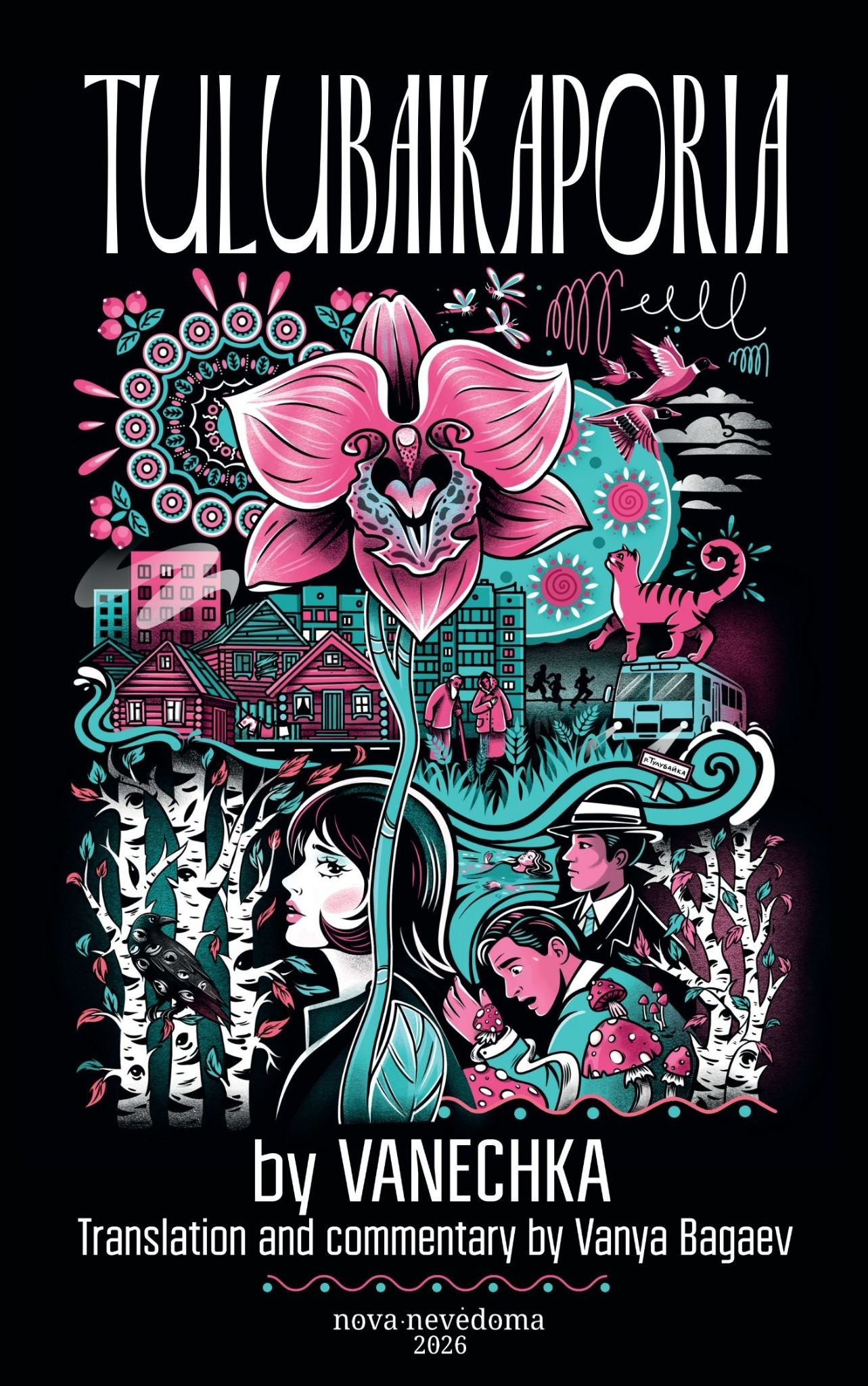
From first appearances, Tulubaikaporia: a ritual is a novel about the rural village (or small town) Tulubaika, located somewhere at the fringes of European Russia, akin to (at least as far as I have gleaned from interviews and substack notes) the birth/growing-up-place of its author, vanechka. Tulubaika is the subject of each of the book’s 23 chapters, each one a rather short story (none exceed 50 pages) and yet, the village itself is more of an absent presence than a real character. In fact, we are told very early that Tulubaika is “asymptotically unreachable”, to travel there is to travel a curve infinitely tending towards y=0, but never touching it.
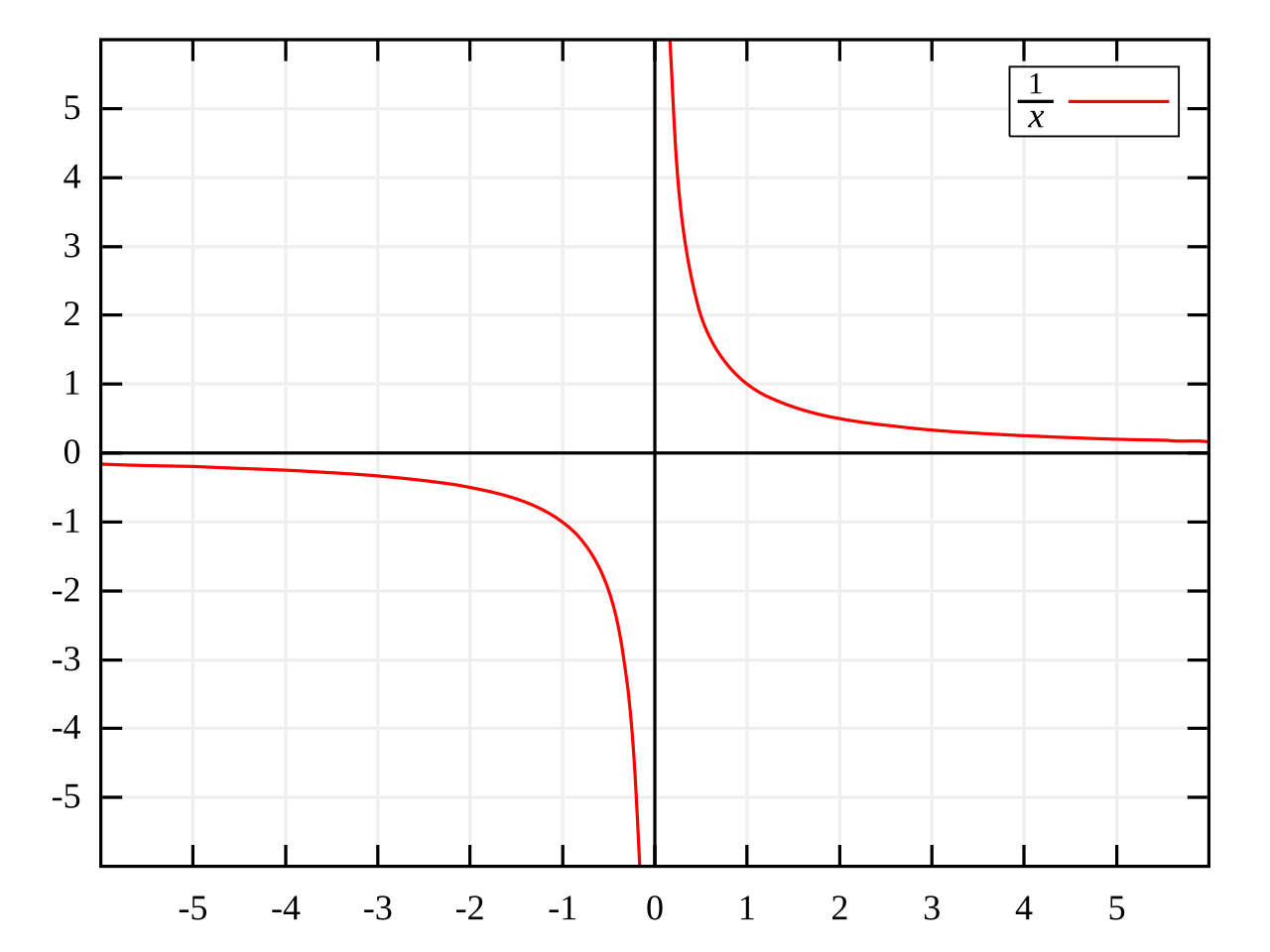
We find many of the book’s characters in the midst of travelling the asymptotes - trying, failing, to arrive in Tulubaika. Their journeys are often a return - not unlike Odysseus’ nostos to Ithaca - from foreign lands where they have been living in quasi-exile. A man waits for what seems like days at a bus stop under the blinding sun as he strives to remain out of (separate from, and therefore ‘above’) the messy tangle of the other people, mostly Tulubaikans, waiting for that same bus. Two pages (87-88) pass of “we wait and wait [etc.]” and “time and time [etc.]”, as the sun (rendered as the delightful, affectionate diminutive ‘Sollie’) beats down mercilessly. In the meantime, conspiracies are discussed, a biker is murdered by a babushka, oat withers, turning bone-white in the fields. Similarly, “abysmal weather conditions” of the polar opposite variety see planes forestalled by blizzards, weary travellers trudge through the snow drifts on foot, ushankas pulled tight over their ears, samogón bubbling warmly in their tummies.1 To them, and to us, Tulubaika is definitively the most unreachable point on the planet.
And fuck, yeah man! I’ve spent a lot of time waiting for buses that never appeared, and Tulubaikaporia ruminates on the ontology of waiting, the odd places that waiting around forces you into, the odder shapes that into which boredom molds your mind, the people you wait with, odder still. Such meditations (themselves produced by waiting), beg the question of whether growing up in a small town inhers waiting to leave it. Tulubaikaporia goes one step further with all these various nostoses. Paired with waiting to leave is the greater part of waiting; the waiting to return to it, even if that return, the dream that animates the nostalghia,2 is striving to reach an impossible 0.
If this implies an inevitability, then be assured that such characters are far from wayward objects, unaware of why they are flinging themselves upstream in time’s river like horny salmon. The drive to reach that 0 is similarly paired with its equal and opposite desire to instead turn the asymptote upwards to escape, forever. One of my favourite chapters (no. 17) finds its hero preoccupied with his inability to overcome the hold Tulubaika has on him, desperate for his journey there to mean little but powerless to stop the tide of memory, emotion, and nostalghia from washing over him. All this is dramatised with great skill and precision by a um…difficult relationship with his authoritarian grandfather. A single, brilliant paragraph hardens all these themes, and many of those across the whole novel, with a gemlike clarity:
“Oh how painful it is to return to that homeland, that home, that street (or a house), after so many years of being away. One who is not who he was comes to a place that is not what it was, and two entities, the character and the place, meet each other again, as if for the first time, a complete and total jamais vu but with a hint of déjà vu, a bit toxic déjà vu — two either idealised or despised images sprouted from the imperfection of memory. All everything does is seeming. It’s never a full circle. It cannot be. One never comes back to the same point. One doesn’t have to disguise oneself as a beggar or someone else to do the nostos, for one is already disguised by time.” (279)
He hates it, it hurts but he cannot sever himself from it forever. He is no longer the same person when he lived there and so is no longer the same person who decided to leave, who was sick of everything Tulubaika and enamoured with everything outside, so the feelings of return are an agonising morass of tension, despair, and love. This is the knot we see very many characters try and fail to untie.
Others, chatting at the very start of the novel, when asked when they’ll return to Tulubaika, shrug and say “Every year I plan to but never quite manage it…Work…” (3). How would you respond if somewhere were to ask about when you’re going visit your grandparents, now living far away and feeling more distant each year? The curve does not touch y=0. This first chapter, where we are first introduced to many concepts that fill this book (asymptotes, Tulubaika’s disappearance, déjà vu and nostalghia) may be the best. It is such a warm, friendly, exuberant first impression that practically bounces off the page with fun and pure enjoyment in showing off its artfulness. Old friends, including the wonderfully named Slavoslav Slavoslavovich, sit around a table in a kitchen, drinking and chatting, at a party, talking about home, about mathematics, about cars, while the best music ever thrums in from the other room.3 A cat called Meowbius tumbles into a pot of borscht. When was the last time I talked with my oldest friends at a house party? Shortly after I finished reading this chapter for the first time I called them up to arrange one. It’s happening soon. Fittingly for a book subtitled ‘a ritual’, Tulubaikaporia works a curious magic on the readers’ mind from the very start, chrysopoeiasing base memory into a slippery, angelic substance that makes time slide easily from past to present, through imperceptible boundaries, vanechka’s excellent prose the alchemical medium.
The particular shape of this magic emerges from the combination of the setting’s specificity and its universality. Tulubaika is a village with a history of Tartar inhabitation with a river, a big birch forest, and lots of old people, somewhere in Vyatka Oblast, Russia. The footnotes bulge the pages to oh-so-helpfully explain the intricacies of Russian idioms, to let us in on the various translation games that the book plays with itself, and to gloss the filigree details of Russian memes with its obscure message board in-jokes and shibboleths. The scars of history from the Russian Civil War, to World War Two, to the transformations of the Soviet Union and its downfall add to Tulubaika’s ‘emplacedness’. It seems deeply personal, or as personal as you can be with multiple viewpoints, narrators, and aspects, and rooted in a certain time or generation of writer/reader, born circa 1990-2000.
But I could not shake the feeling that despite all this context, vanechka was conducting a literary masquerade. Is Tulubaika in fact located somewhere in southern England? The birches seem codes for oaks and willows, the various escapes of Tulubaikan youth to cities and overseas mask the realities of flight from small southern towns into London, the endless fields of oat in fact the gentle undulations of the Lea Valley. How was it that vanechka managed to write a book about my home, where I grew up, the nostalghia I feel living far from my birthplace? Did I also grow up in Tulubaika?4 And that element of time that I mentioned above only adds to this odd illusion - is vanechka also my age, old enough to remember the older internet (and Elder Scrolls III & IV), but hitting (relative) maturity precisely at the right time to midwife the age of hyper-ironised meme culture?
The clue is in the name. Tulubaikaporia: a ritual. Tulubaika is reminiscent of the balalaika (to foreign ears at least) combined with the Greek aporia - denoting, variously, a feigned, rhetorical doubt or, the essence of a conundrum, the feeling of being stuck on an idea that you cannot make sense of, appearing most prominently in Socratic dialogues. The book presents us with many aporia, conundra to weave and unweave, but vanechka leaves us clues, threads to wend our way out of the labyrinth of time, place and memory. One such clue is that the old(er) people of Tulubaika speak in a form of Yorkshire or North-East English dialect. Whole chapters take place in this voice. Episode Twelve (about meeting strange cats in birch groves) for example:
“So there tha is, walkinn among t’birches, leaves above and below shimmerinn like gold; tha’s ponderinn life, t’past, lost in nostalghia, a bit of regret, always with a smile, mind thee…See, she’s daft ‘bout all that Eastern malarkey, talks ‘bout wantinn to be reborn as a bloom, a lil’pink orchid”. (216)5
And so on. I live in Yorkshire so I clung to this choice on my first reading as one of some significance, so I messaged vanechka about it and he helpfully responded thusly:
“I just love Yorkshire accent, it has a warm slightly rural feel for me in the best way, plus it has thou/you thingy, which I miss in English. however in the book I think it’s more of a mix of Northern English dialects. I picked it over just making it sound archaic because it has other connotations like biblical/shakespearean etc. Russian accents are less prominent within the country, they aren’t as vivid as English ones and you’d mostly hear it from old people. In a place like Tulubaika, people just talk a bit differently and use some non-standard words. I had to render that feel somehow but I didn’t want to pick e.g. Irish or Scottish or some other one, and tried to avoid Americanisms as well, because that would signal something too ethnically particular, unlike Northern English dialects/accents e.g. Yorkshire, which would be a subset of English, like e.g. people in Vyatka region where Tulubaika is speak normal Russian with a slight twist, but if it was e.g. another ethnic region that wouldn’t work for me, but I have to say Russian village speech is rather a bit archaic / rural Russian than a separate dialect, the problem with rendering it to English for me is there’s not exact alternative because English actually have vivid regional accents — that combined with my love for it, somewhat made it a natural choice for me... I was thinking of doing the audiobook by a reader with Yorkshire accent as well”.
This struck me as the essence of translation and the key to understanding the balance between universality and specificity in Tulubaikaporia (and nostalgia/nostalghia more broadly). See, our author is really two authors, or two aspects of one author arranged around the act of writing, one aspect taking over from the other. This fact greets us from the title page. Tulubaikaporia: a ritual is written by vanechka with “Translation and commentary by Vanya Bagaev”. Based on this, and supporting information on the nova·nevédoma website, we see, first, vanechka as the writer-writer who takes pure, unalloyed pleasure in language and creation. Second is Vanya Bagaev, known otherwise for his novel Deleted Scenes from the Bestselling Utopian Novel, who plays translator, compiler, and glosser. It is he who has provided such obliging footnotes for the curious outsider and is responsible for the choice to render the speech of Tulubaikans as Yorkshire-accented English. vanechka has stated elsewhere that he often, but not always, writes in Russian but translates this to English as he goes. Sundering the authoring-self into the writing and the translating part fits this particular authorial practice.
Consider this split in light of one of Vanya/vanechka’s heroes - James Joyce.6 Joyce spent years, collectively, toiling over each sentence in Ulysses, famously 8 hours alone on the superhot “The heaventree of stars hung with humid, nightblue fruit”, and at the same time he is the man who made the very silly jokes like Leopold Bloom’s name being misheard at Paddy Dignam’s funeral causing his name to be rendered ‘Leopold Boom’ in that evening’s paper.7 That these elements are mutually reinforcing, that the work of the author to re-create (or re-dramatise) life through art means that it ought to give equal weight to both the silliest and most serious parts of it, and this necessitates such authors to take on multiple guises (dis-guises?) is a wonderful artistic insight embodied by the vanechka/Vanya Bagaev split.8 These persona games bear real fruit, rather than only being simple gestures at the complexities of ‘being known online’, or something similarly banal.
Through reading Tulubaikaporia, I came to realise that sundering the process of authoring a novel into these two elements, or poles, of creation, interrelated but distinct, is a masterstroke. It invites interrogation on the nature of fiction (or literature) compared to imagination. All literature is fundamentally translation between the inner world (of memory, of emotion, of dreams) and the outer world (of speech, of gesture, of action). This occurs through the characters of a given book - both if their actions are an accurate representation of the interior world or if we are invited to delight in the ironies of actions contradictory to the feelings and desires of the character.9 Tulubaikaporia elevates this play to correspond both to the act of writing and the act of reading. To write is to translate the inner to outer and to discipline imaginative exuberance into narrative, plot, and character. Similarly, to read that book is to dramatise and narrativise, to observe as if it were happening to oneself, the same processes filtered through experiences all of one’s own. In short, to translate. Thus the Yorkshire dialect can stand in so perfectly for the Russian Rural. Because Tulubaikaporia makes nostalghia its primary focus speaks to its achievement as a work of modern(ist) literature, for what better example do we have of the particular being made universal?
On the blurb, vanechka implores the reader to ‘save’ Tulubaika from vanishing into the fog of forgetting. The penultimate chapter of Tulubaikaporia follows a group of four Tulubaikans at an anti-nostalghist support group (probably overseas) who are forbidden from talking about Tulubaika. They stress and strain at this prohibition, trying to tell jokes or talk about the weather but always returning, elliptically, to speaking about Tulubaika in some way or another. I see this like the rhetorical device of preterition, to speak of something by explicitly and distractingly not speaking of it.10 At the end of the chapter, a headline declares that Tulubaika has finally vanished, forever, an ending foretold in the very first chapter. Thus, as vanechka has since glossed, to save Tulubaika is to transform it into a literary artifact - a setting - that can then be dispersed via Tulubaikaporia and preserved forever.
Ada, or Ardor by the greatest of the Russian exile novelists, Vladimir Nabokov, comes to mind as a point of comparison. Nabokov dreamed into existence a parallel world of Russian exile, the Russo-Franco-Anglo Canada/America of the novel forming a sort of dream-Europe, a pre-Russian Revolution consensus of aristocratic refinement, immune to the chaos of our world’s political disturbances. The actual Russia takes on the guise of ‘Tartary’ and is the novel’s barbaric other, a literal Tartarus to safely imprison the historical ugliness of Russian history, leaving only that which is sophisticated and cosmopolitan in Russian émigré existence for Nabokov’s characters to cavort in. The effect of this choice is that the world of Ada or Ardor that which Nabokov, or perhaps the generic, cultured Russian exile of the 20th Century, wished to reside in. However, from clues to the Real World that pervade the novel, it is equally a Hell akin to that conjured by the Cartesian demon, a sphere of dreams and ghosts that is trapped purgatorially in the minds of men and the pages of a book. Is this the destiny of Tulubaika? Is the ritual more of a curse, or an abjuration to banish nostalghia from the Real World to be entombed forever in the novel?
I don’t believe that vanechka is quite such a pessimist about fiction, imagination and storytelling. For one, I believe his titular ritual to be an unqualified success. Much like the imaginary worlds of ‘Tlön, Uqbar, and Orbus Tertius’ in Jorge Luis Borges’ story of the same name, Tulubaika is a more perfect world for those who have left home. At the end of ‘Tlön, Uqbar, and Orbus Tertius’, teased by my epigraph for this essay, the Real World, the here and now, is utterly taken over by Tlön, Uqbar, and Orbus Tertius (philosophically alterior worlds constructed by a secretive cadre of geniuses and distributed by various objects and encyclopedias scattered across the globe). Within a few years, Spanish and English are doomed to obsolescence, academic departments are revolutionised forever by the entrancing epistemologies of these artificial lands, as we are attracted, moths to a flame, by the promise of a world organised by orderly intelligences. So perfect is Tulubaika a metaphor for nostalghia, it too threatens to intrude into the messy, phenomenal world of perceptible reality and occlude it with its dreams of mushrooms, birch, and pure gold. In our times, the lotus eating of nostalghia has become an almost universal pastime, consuming popular culture and movies, music, sartorial fashions, with the busywork of endless repetition. We all seem to want to live not so much in another place as in another time. Is this the essence of Tulubaikaporia’s ritual? Tulubaika has disappeared because it is everywhere, dispersed like an aerosol into the hearts and minds of all humans who have, in some way or another, left home.
And the world is sufficiently suffused, so we can move on. Now having reached that elusive 0, we can stop talking about Tulubaika and, much like the characters in this penultimate chapter, instead chat about more important things, like the weather.
Thanks for reading! This took a lot of gestating and turned more into a literary essay than a review. Tulubaikaporia is a book that invites speculation and analysis, while also being very fun and funny, but the difficulty in getting this ready can partly be explained by vanechka’s own eagerness to explain his work himself, leaving such little room for the eternally suffering class of essayists. So, despite this essay’s failings as a review, I’ve found literary essays far more convincing than reviews when it comes to getting me to read books. So much so that I almost wrote a parallel essay about Tulubaika’s disappearance in relation to other disappearing characters/places. You can see the stub of it with the references to Borges and Nabokov but I almost wrote another 300-500 words about Pynchon’s vanishing/dissolving protagonists in Gravity’s Rainbow and Shadow Ticket and I thought it such a swell idea, if not a good essay, that I had to mention it in this postscript which, as we all know, does not count. Even the asymptote, never reaching 0, idea has strange affinities to GR’s whole ‘beyond the 0’ concepts. Maybe one day this will all come together, but probably not unless I decide to ruin my life by writing at length about Pynchon. Who knows! See you this summer in Tulubaika, it promises to be a scorcher <3
As I have learned, samogón is a form of Russian moonshine.
The English nostalgia is only ever spelled ‘nostalghia’ in Tulubaikaporia as a way to reference Andrei Tarkovsky’s 1983 classic of the same name, that title coming from an Italian transcription of the Russian “Russian word ностальгия [nəstɐlʲˈɡʲijə] with the digraph ⟨gh⟩ used to indicate a different consonant from the one in the Italian nostalgia [nostalˈdʒiːa].”, this according to wikipedia.
Specifically, Pink Floyd’s ‘Wish You Were Here’, and Yegor Letov’s ‘Ophelia’, the latter from his project Yegor i Opizdenevshiye, which wikipedia renders Yegor and the Fucking Stunned’s, but a Russian friend helpfully translated as Yegor and the Cuntifieds. I like the latter more.
To add to this madness, I used to listen to the album that the Yegor Letov song, ‘Ophelia’ is from, Sto let odinochestva (100 Years of Solitude), while commuting on a rail replacement bus destined for Stevenage (nowhere good) in 2019-20, which confirms that Tulubaika really IS in the Lea Valley of East Hertfordshire and NOT somewhere in Russia.
I picked this passage not just because it references the orchid, a recurrent image in Tulubaikaporia which will, to my regret, remain un/underanalysed in this essay so I’ll have to leave it to other glossers, or to Vanya Bageav, translator etc., himself, but because it includes such clear Yorkshire-isms - “tha”, “t’”, “thee”, “daft”.
For Bagaev on Joyce, see his excellent essay on Joyce and Sergei Eisenstein.
I am aware that this may rank near to the bottom of Joyce’s best or most vulgar jokes, but it’s my favourite.
So too, arguably, the split of Joyce himself into older/younger aspects - Leopold Bloom and Stephen Dedalus.
Shakespeare is master of the latter. Consider all the misunderstandings, mistaken identities, misinterpreted gestures and all the work it takes for unity of inner/outer to be achieved by the end of his plays (especially his comedies, which are his best works). Hamlet is the superior tragedy because it is this play of inner/outer taken to the nth degree and dramatised primarily in the interior world of a single character.
See the medieval concept of the ‘unspeakable’ sin of homosexual sex..